The Best Time of Year to Paint Your Home’s Exterior
Most homeowners think about exterior painting when they notice the paint starting to look tired. That’s fair. But when you choose to start the job matters almost as much as the work itself.
Get the timing wrong and you’re dealing with paint that blisters in the heat, runs in the rain, or doesn’t adhere properly because it was applied when it was too cold. Get it right and a quality paint job will hold for years.
Why Timing Matters More Than You Think
Exterior paint needs the right conditions to bond properly to the surface underneath. Too cold and it won’t cure correctly. Too hot and it dries too fast, leaving brush marks and uneven coverage. Wet or damp surfaces cause adhesion failure that shows up months later as peeling.
Most paint manufacturers specify a minimum application temperature of around 10 degrees Celsius, with an ideal range between 10 and 25 degrees. Surface temperature matters too, not just air temperature. A wall that’s been in direct sun all day can be 10 to 15 degrees hotter than the air around it.
Spring: A Good Start if the Conditions Are Right
March and April can work well, particularly for south-facing walls that warm up quickly as the days lengthen. The main risk is unpredictability. A dry week in April can give way to a week of drizzle without much warning.
If you’re planning a spring job, build in flexibility around the forecast. Watch for overnight temperatures dropping below 5 degrees, which can affect how the paint cures even if the day itself was warm enough.
Summer: The Most Reliable Window
June through August is the most consistent period for exterior painting in the UK. Temperatures stay above the minimum threshold reliably, daylight hours are long, and morning dew clears early.
The one thing to manage in summer is direct heat. On a south-facing wall in full sun, the surface can get genuinely hot. Experienced painters work around the sun on those days, moving to shaded elevations during peak heat and returning when conditions cool.
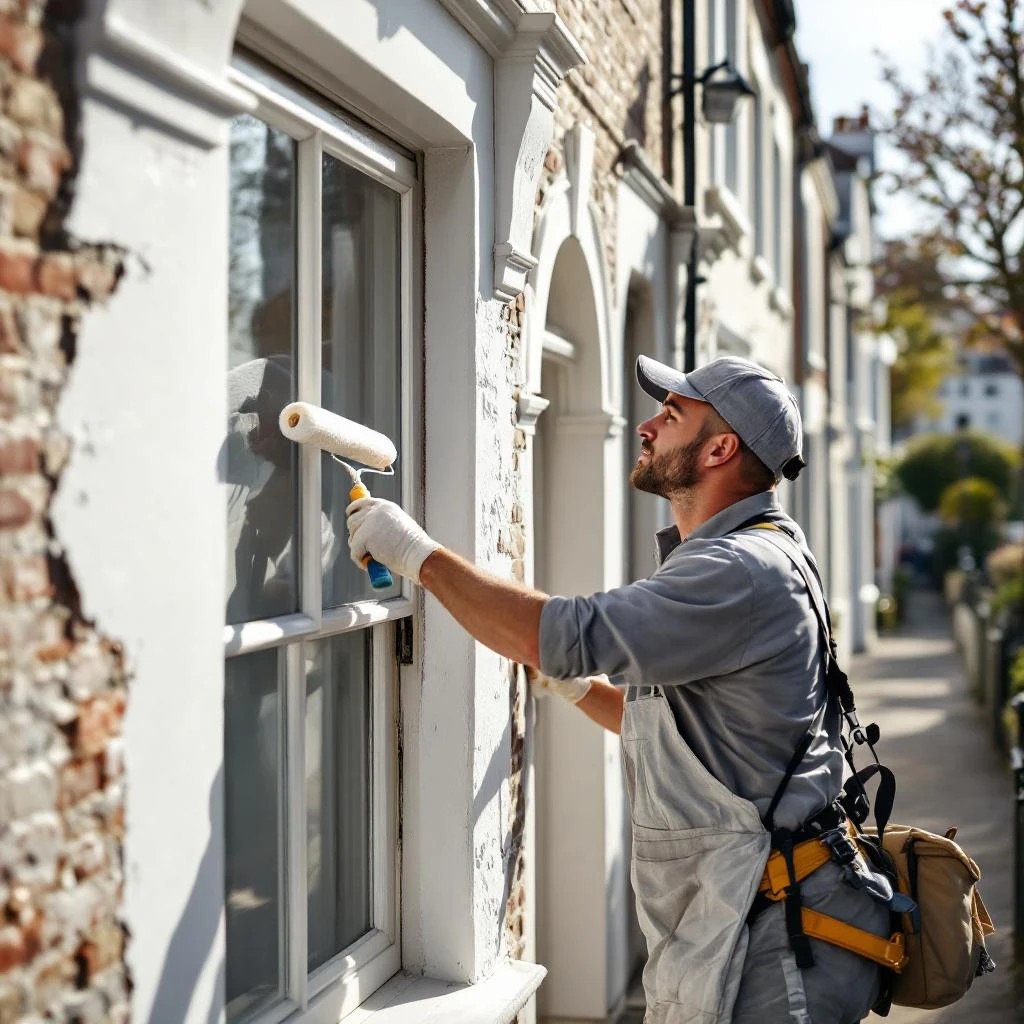
Autumn: Underrated, and Often Ideal
September and October are underappreciated for this kind of work. Temperatures are still comfortably above the minimum, surfaces have been drying out all summer, and there is far less direct sun to cause overheating.
It is also typically easier to book tradespeople in autumn than in June or July when demand peaks. If your house needs painting and summer has passed, there is no reason to wait until next year.
Winter: Why Professionals Recommend Waiting
From November through February, the combination of low temperatures, short days, and persistent damp makes exterior painting genuinely difficult. Even a day that looks dry can leave surfaces with residual moisture that kills adhesion.
Most professional decorators will not quote for exterior work in the depths of winter, and for good reason. The risk of a job failing and needing to be redone outweighs any benefit from getting it done sooner.
What Makes Brighton’s Climate Different
Brighton and Hove sits on the south coast, which gives it one of the milder and more consistently dry climates in the UK. This means the painting window extends a bit longer here than in northern England or Scotland.
That said, the coastal location brings its own challenges. Salt air accelerates paint degradation, particularly on properties close to the seafront. If your home is within half a mile of the coast, it is worth using a paint specifically formulated for coastal conditions, and budgeting for repainting on a slightly shorter cycle than the standard five to seven years.
Frequently Asked Questions
What temperature is too cold to paint outside?
Most exterior paints require a minimum air temperature of 10 degrees Celsius during application and for at least 24 hours afterwards while the paint cures. If the overnight forecast drops below 5 degrees, it is worth waiting even if the day itself looks fine.
How long does exterior paint take to dry?
Touch dry is usually 2 to 4 hours. Recoatable in 4 to 6 hours under good conditions. Full curing, where the paint reaches its final hardness and adhesion, takes around 30 days. During that period it is more vulnerable to rain and temperature extremes.
Can you paint outside in light rain?
No. Even light rain introduces moisture to the surface that compromises adhesion. The surface also needs to be dry before you start, ideally with no rain in the previous 24 hours. Professionals check both the current forecast and the recent weather history before beginning.
How do I know if my exterior needs repainting?
The most obvious signs are visible peeling, flaking, or chalking on the surface. More subtle indicators include fading, patches where the colour looks uneven, or areas where moisture seems to be getting behind the paint. On timber window frames and fascias, look for cracks in the paint film where water can get in.
Should I pressure wash before painting?
Yes, for almost any exterior job. A pressure wash removes dirt, algae, mould, and loose existing paint that would otherwise cause adhesion problems. The surface then needs time to dry fully before painting begins, usually at least two to three dry days.