Author: Roman Stojanovic

  • Does PRP Work for Hair Loss? The Truth Explained

    Does PRP Work for Hair Loss? The Truth Explained

    Understanding where growth factor therapy fits into modern hair loss management

    Hair loss treatment options have expanded significantly in recent years, and many people are now looking for non-surgical approaches that may support hair growth or slow ongoing thinning. Among these options, growth factor therapy has gained attention as a method designed to support follicle health rather than replace hair surgically.

    So, does PRP work for hair loss? In this blog, we explain how growth factor therapy is intended to support the hair growth environment, when it may be useful, when it may be less effective and what realistic expectations should look like.

    Does PRP Work for Hair Loss?

    Growth factor therapy, often referred to as PRP, is used to support hair follicles by improving the scalp environment and encouraging healthier growth cycles. While results vary between individuals, many people choose this approach as a non-surgical option aimed at supporting existing hair and slowing ongoing thinning.

    Rather than creating new follicles, growth factor therapy is designed to strengthen follicles that are still active. This is why outcomes are usually most noticeable in individuals experiencing early or moderate hair thinning rather than advanced hair loss.
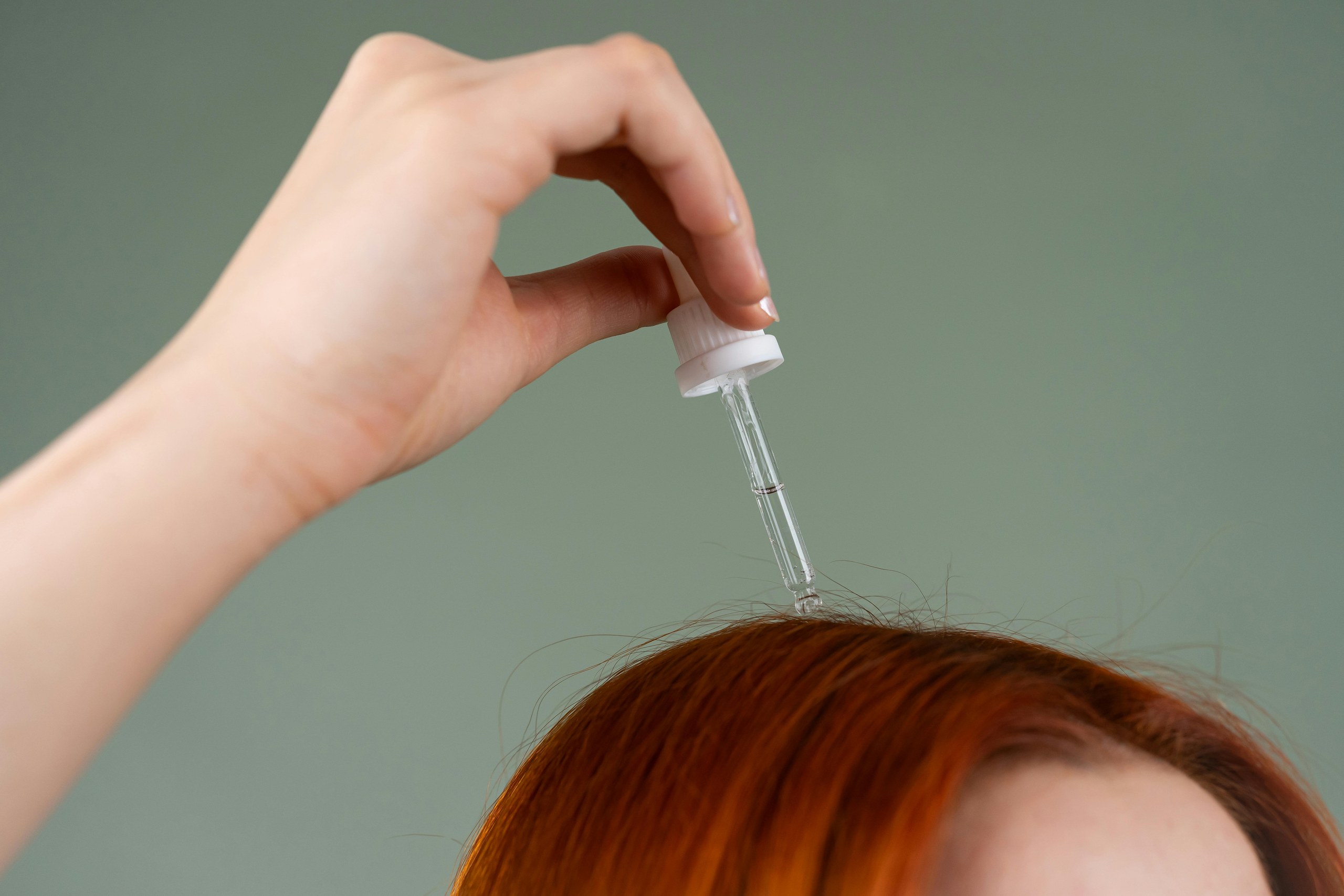
    Doctor preparing PRP injection for hair loss
    Growth factor therapy is designed to support existing hair follicles rather than replace lost hair.

    What Growth Factor Therapy Is Designed to Do

    Growth factor therapy is intended to support the environment around hair follicles as a non-surgical hair loss treatment designed to encourage healthier growth cycles. The goal is not instant regrowth, but rather encouraging healthier follicle behaviour over time.

    In practical terms, this approach aims to reduce excessive shedding, improve hair quality and support thicker-looking growth where follicles are still viable. For this reason, it is often considered a supportive strategy rather than a standalone solution.

    When Growth Factor Therapy May Be Most Useful

    Growth factor therapy is usually considered when follicles are still active and capable of responding to stimulation. It tends to be most helpful in situations where the goal is to support existing hair rather than restore areas that are already fully bald.

    • Early-stage thinning or gradual density loss
    • Diffuse shedding across the scalp
    • Individuals looking for non-surgical support
    • Combination approaches alongside other hair loss management strategies

    When It May Not Be the Right Approach

    While growth factor therapy can be helpful in some cases, it is not suitable for every type of hair loss. Understanding limitations helps prevent unrealistic expectations and supports better treatment planning.

    • Advanced baldness, where follicles are no longer active
    • Areas with long-standing hair loss and minimal regrowth potential
    • Untreated medical or hormonal causes of shedding
    • Expectations of rapid or dramatic regrowth

    Hair growth results after PRP therapy
    Growth factor therapy is often used as part of a long-term hair management strategy.

    How Growth Factor Therapy Fits Into a Long-Term Hair Plan

    Hair loss is rarely a single-event issue, which is why treatment planning often focuses on long-term management rather than short-term change. Growth factor therapy is typically viewed as a supportive strategy that helps maintain follicle health and stabilise ongoing thinning over time.

    In many cases, it forms part of a broader approach that may include monitoring hair loss progression, supporting scalp health and adjusting treatment strategies as needs change. Thinking about hair restoration as a long-term plan rather than a one-off solution helps set more realistic expectations and often leads to better overall outcomes.

    What Results Can You Realistically Expect?

    Results from growth factor therapy are typically gradual rather than immediate. Many individuals first notice reduced shedding or improved hair quality before seeing visible changes in density or thickness. As hair grows in cycles, meaningful changes usually develop over several months rather than weeks.

    The aim is often to stabilise hair loss and support healthier growth rather than achieve a dramatic transformation. Maintenance sessions may be recommended to help sustain results over time, and outcomes vary depending on factors such as hair loss stage, scalp health and overall treatment planning.

    Common Myths About PRP Hair Restoration

    Myth 1: PRP regrows hair everywhere

    Growth factor therapy does not create new follicles in areas where they are no longer active. Instead, it works by supporting follicles that still have growth potential, which is why timing and early intervention often influence outcomes.

    Myth 2: Results happen quickly

    Hair growth follows a slow biological cycle, so visible improvement takes time. Even when treatment is working well, most individuals notice gradual changes rather than immediate regrowth.

    Myth 3: PRP replaces other treatments

    Growth factor therapy is often used alongside other hair loss strategies rather than as a replacement. Combining approaches may provide more balanced long-term support depending on individual needs.

    Final Thoughts

    So, does PRP work for hair loss? Growth factor therapy may support hair quality and reduce shedding in suitable individuals, particularly when follicles remain active, and treatment expectations are realistic. It is best viewed as a supportive option rather than a guaranteed solution.

    Understanding where growth factor therapy fits within overall hair loss management helps individuals make more informed decisions. If you are concerned about ongoing thinning, a professional assessment can help determine whether this approach is appropriate for your situation.

    How to Book a Consultation

    Booking your consultation is simple.

    Opening Hours

    Mon – Fri: 8:30am – 5:00pm

    Sat – Sun: Closed

    FAQs

    Does PRP work for hair loss?

    Growth factor therapy, often referred to as PRP, may help support hair quality and reduce shedding in suitable individuals. Results vary depending on hair loss stage, follicle activity and overall scalp health.

    How long does it take to see results from growth factor therapy?

    Hair growth occurs in cycles, so changes are usually gradual. Many individuals notice reduced shedding first, with visible improvements typically developing over several months.

    Is PRP hair restoration permanent?

    Growth factor therapy is generally considered a supportive treatment rather than a permanent solution. Maintenance sessions may be recommended to help sustain results over time.

    Who is most suitable for growth factor therapy?

    It is often most suitable for individuals with early-stage thinning or diffuse hair loss where follicles are still active. Advanced baldness may respond less effectively.

    Can growth factor therapy be combined with other hair loss treatments?

    Yes, it is often used alongside other hair loss management strategies as part of a broader long-term plan, depending on individual needs and professional assessment.

    Any surgical or invasive procedure carries risks. Before proceeding, you should seek a second opinion from an appropriately qualified health practitioner.
  • The Best Time of Year to Paint Your Home’s Exterior — Hove Decor

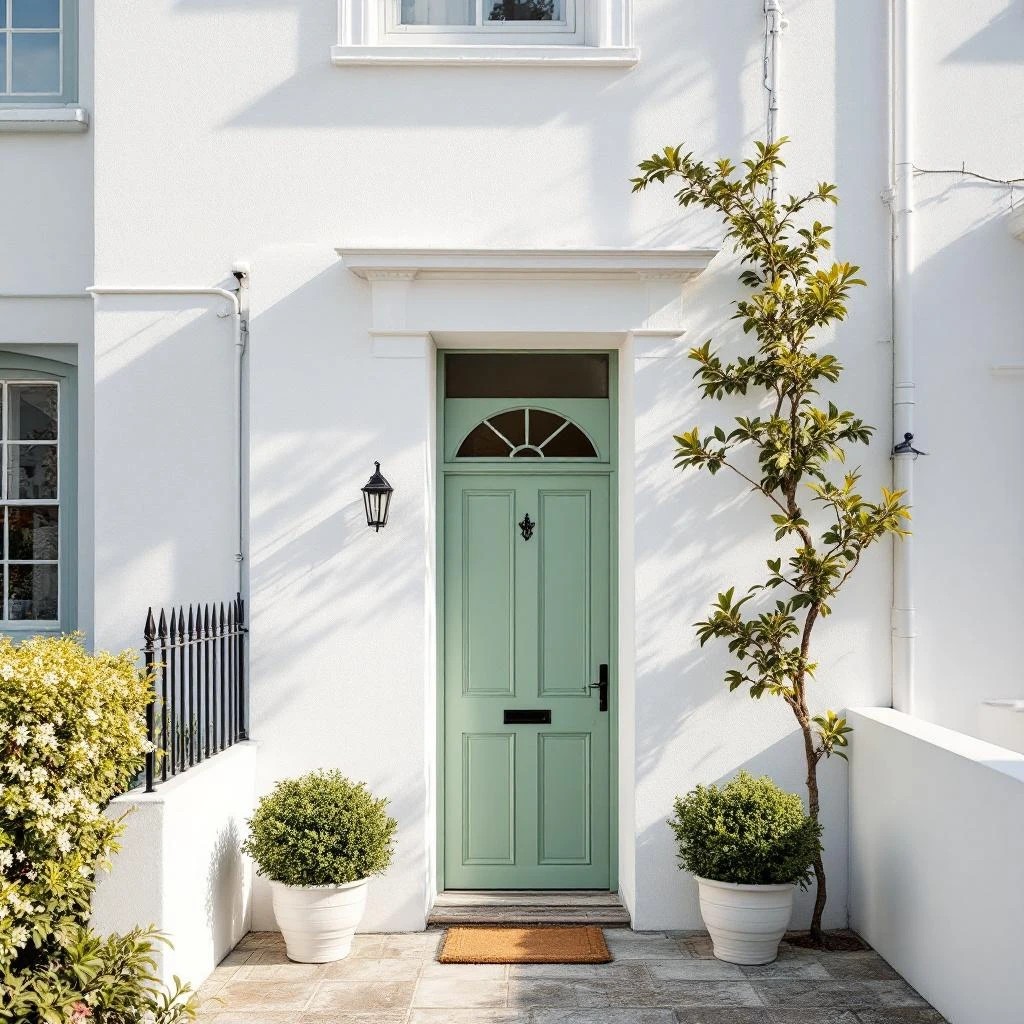
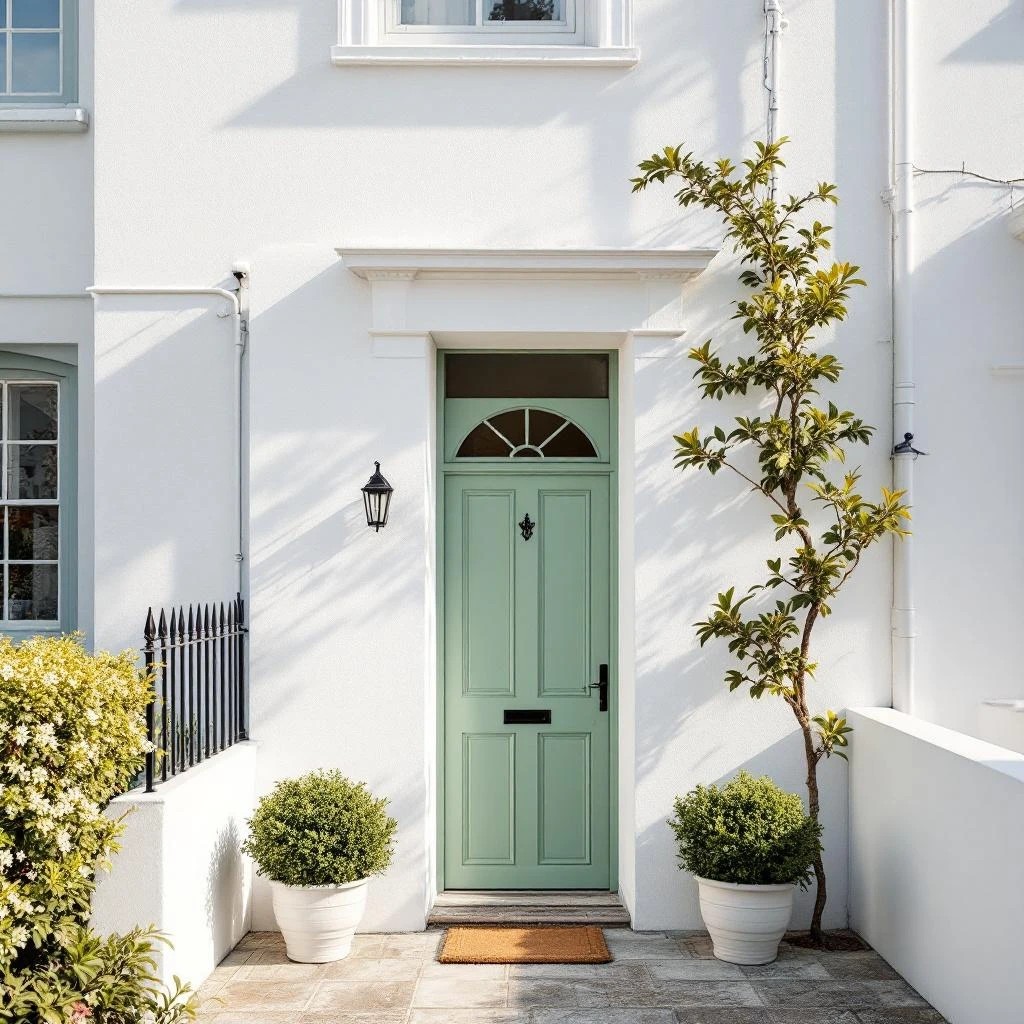
    It's a door! Beautiful

    The Best Time of Year to Paint Your Home’s Exterior

    Most homeowners think about exterior painting when they notice the paint starting to look tired. That’s fair. But when you choose to start the job matters almost as much as the work itself.

    Get the timing wrong and you’re dealing with paint that blisters in the heat, runs in the rain, or doesn’t adhere properly because it was applied when it was too cold. Get it right and a quality paint job will hold for years.

    Why Timing Matters More Than You Think

    Exterior paint needs the right conditions to bond properly to the surface underneath. Too cold and it won’t cure correctly. Too hot and it dries too fast, leaving brush marks and uneven coverage. Wet or damp surfaces cause adhesion failure that shows up months later as peeling.

    Most paint manufacturers specify a minimum application temperature of around 10 degrees Celsius, with an ideal range between 10 and 25 degrees. Surface temperature matters too, not just air temperature. A wall that’s been in direct sun all day can be 10 to 15 degrees hotter than the air around it.

    Spring: A Good Start if the Conditions Are Right

    March and April can work well, particularly for south-facing walls that warm up quickly as the days lengthen. The main risk is unpredictability. A dry week in April can give way to a week of drizzle without much warning.

    If you’re planning a spring job, build in flexibility around the forecast. Watch for overnight temperatures dropping below 5 degrees, which can affect how the paint cures even if the day itself was warm enough.

    Summer: The Most Reliable Window

    June through August is the most consistent period for exterior painting in the UK. Temperatures stay above the minimum threshold reliably, daylight hours are long, and morning dew clears early.

    The one thing to manage in summer is direct heat. On a south-facing wall in full sun, the surface can get genuinely hot. Experienced painters work around the sun on those days, moving to shaded elevations during peak heat and returning when conditions cool.

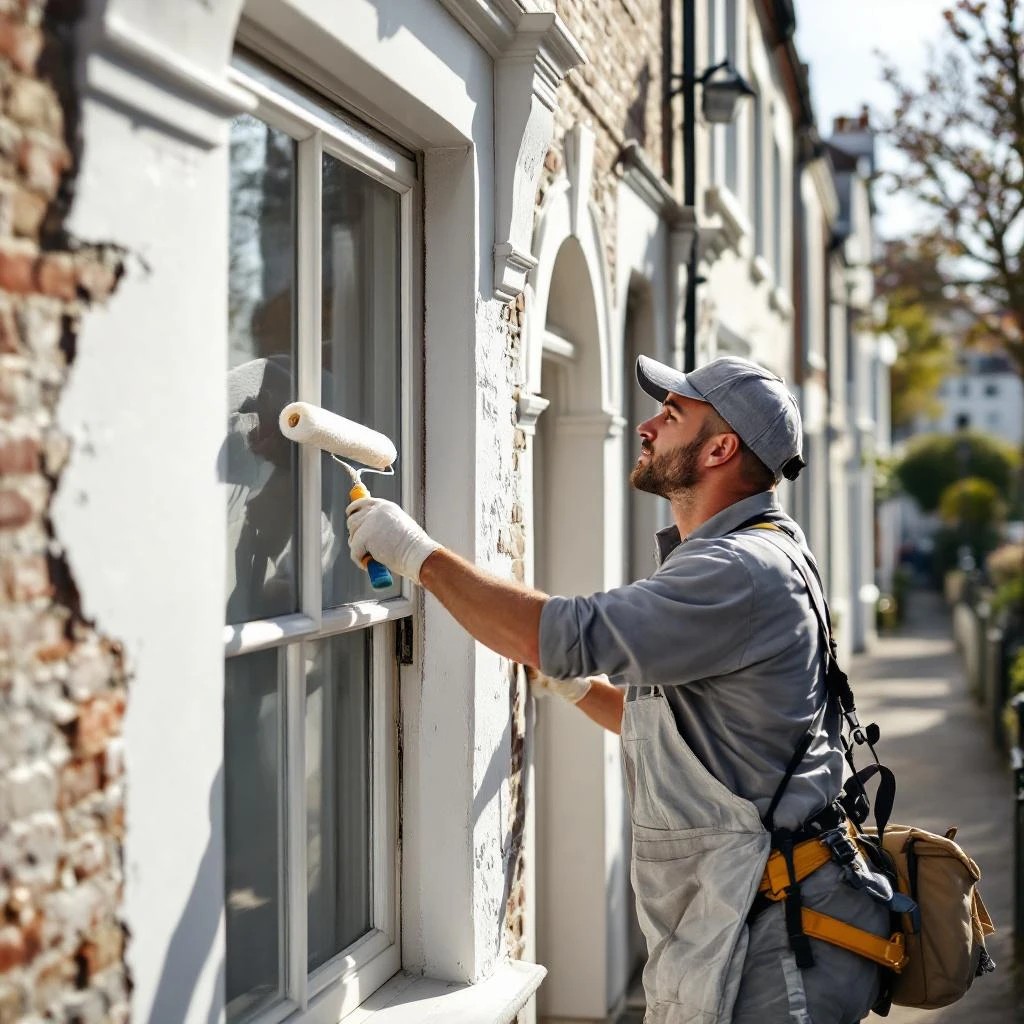
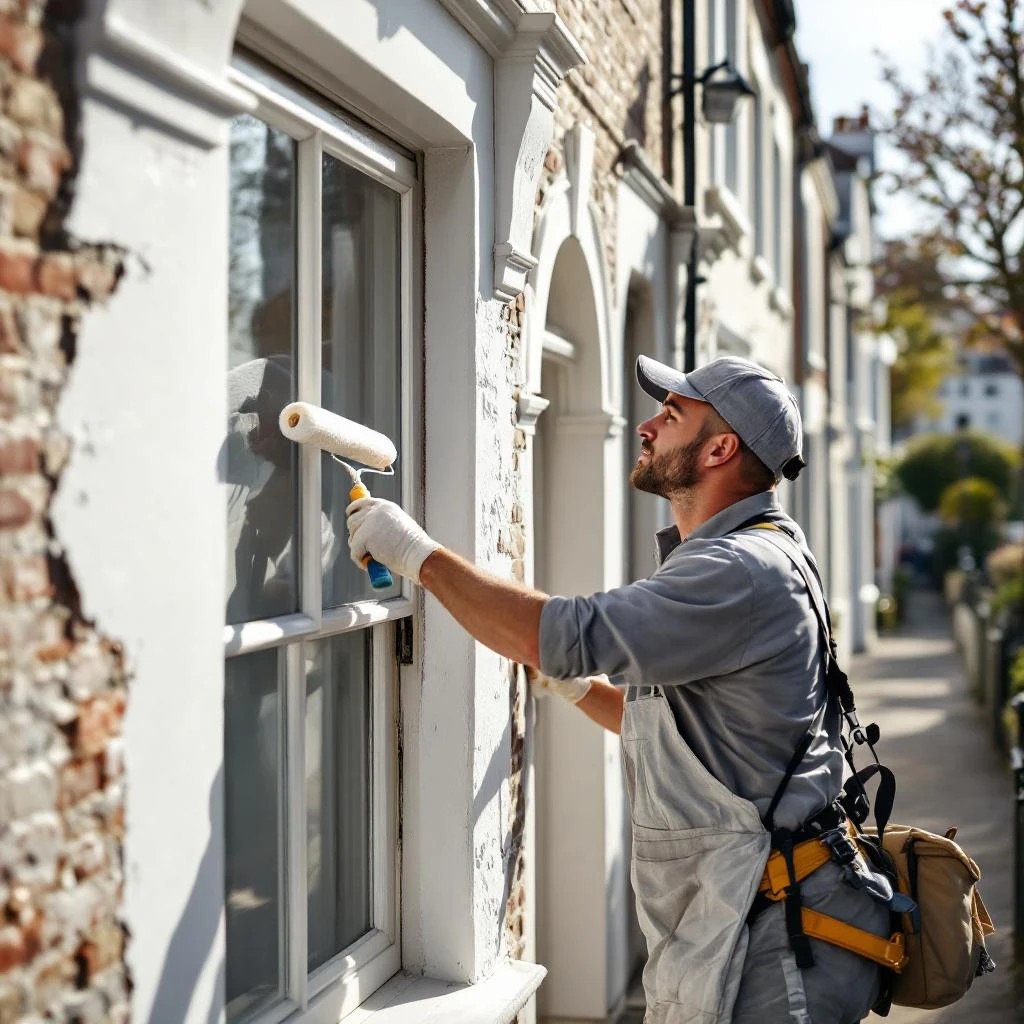
    A man, paint rolling a window???

    Autumn: Underrated, and Often Ideal

    September and October are underappreciated for this kind of work. Temperatures are still comfortably above the minimum, surfaces have been drying out all summer, and there is far less direct sun to cause overheating.

    It is also typically easier to book tradespeople in autumn than in June or July when demand peaks. If your house needs painting and summer has passed, there is no reason to wait until next year.

    Winter: Why Professionals Recommend Waiting

    From November through February, the combination of low temperatures, short days, and persistent damp makes exterior painting genuinely difficult. Even a day that looks dry can leave surfaces with residual moisture that kills adhesion.

    Most professional decorators will not quote for exterior work in the depths of winter, and for good reason. The risk of a job failing and needing to be redone outweighs any benefit from getting it done sooner.

    What Makes Brighton’s Climate Different

    Brighton and Hove sits on the south coast, which gives it one of the milder and more consistently dry climates in the UK. This means the painting window extends a bit longer here than in northern England or Scotland.

    That said, the coastal location brings its own challenges. Salt air accelerates paint degradation, particularly on properties close to the seafront. If your home is within half a mile of the coast, it is worth using a paint specifically formulated for coastal conditions, and budgeting for repainting on a slightly shorter cycle than the standard five to seven years.

    Nice.

    Frequently Asked Questions

    What temperature is too cold to paint outside?

    Most exterior paints require a minimum air temperature of 10 degrees Celsius during application and for at least 24 hours afterwards while the paint cures. If the overnight forecast drops below 5 degrees, it is worth waiting even if the day itself looks fine.

    How long does exterior paint take to dry?

    Touch dry is usually 2 to 4 hours. Recoatable in 4 to 6 hours under good conditions. Full curing, where the paint reaches its final hardness and adhesion, takes around 30 days. During that period it is more vulnerable to rain and temperature extremes.

    Can you paint outside in light rain?

    No. Even light rain introduces moisture to the surface that compromises adhesion. The surface also needs to be dry before you start, ideally with no rain in the previous 24 hours. Professionals check both the current forecast and the recent weather history before beginning.

    How do I know if my exterior needs repainting?

    The most obvious signs are visible peeling, flaking, or chalking on the surface. More subtle indicators include fading, patches where the colour looks uneven, or areas where moisture seems to be getting behind the paint. On timber window frames and fascias, look for cracks in the paint film where water can get in.

    Should I pressure wash before painting?

    Yes, for almost any exterior job. A pressure wash removes dirt, algae, mould, and loose existing paint that would otherwise cause adhesion problems. The surface then needs time to dry fully before painting begins, usually at least two to three dry days.

  • The Best Time of Year to Paint Your Home’s Exterior — Hove Decor

    It's a door! Beautiful

    The Best Time of Year to Paint Your Home’s Exterior

    Most homeowners think about exterior painting when they notice the paint starting to look tired. That’s fair. But when you choose to start the job matters almost as much as the work itself.

    Get the timing wrong and you’re dealing with paint that blisters in the heat, runs in the rain, or doesn’t adhere properly because it was applied when it was too cold. Get it right and a quality paint job will hold for years.

    Why Timing Matters More Than You Think

    Exterior paint needs the right conditions to bond properly to the surface underneath. Too cold and it won’t cure correctly. Too hot and it dries too fast, leaving brush marks and uneven coverage. Wet or damp surfaces cause adhesion failure that shows up months later as peeling.

    Most paint manufacturers specify a minimum application temperature of around 10 degrees Celsius, with an ideal range between 10 and 25 degrees. Surface temperature matters too, not just air temperature. A wall that’s been in direct sun all day can be 10 to 15 degrees hotter than the air around it.

    Spring: A Good Start if the Conditions Are Right

    March and April can work well, particularly for south-facing walls that warm up quickly as the days lengthen. The main risk is unpredictability. A dry week in April can give way to a week of drizzle without much warning.

    If you’re planning a spring job, build in flexibility around the forecast. Watch for overnight temperatures dropping below 5 degrees, which can affect how the paint cures even if the day itself was warm enough.

    Summer: The Most Reliable Window

    June through August is the most consistent period for exterior painting in the UK. Temperatures stay above the minimum threshold reliably, daylight hours are long, and morning dew clears early.

    The one thing to manage in summer is direct heat. On a south-facing wall in full sun, the surface can get genuinely hot. Experienced painters work around the sun on those days, moving to shaded elevations during peak heat and returning when conditions cool.

    A man, paint rolling a window???

    Autumn: Underrated, and Often Ideal

    September and October are underappreciated for this kind of work. Temperatures are still comfortably above the minimum, surfaces have been drying out all summer, and there is far less direct sun to cause overheating.

    It is also typically easier to book tradespeople in autumn than in June or July when demand peaks. If your house needs painting and summer has passed, there is no reason to wait until next year.

    Winter: Why Professionals Recommend Waiting

    From November through February, the combination of low temperatures, short days, and persistent damp makes exterior painting genuinely difficult. Even a day that looks dry can leave surfaces with residual moisture that kills adhesion.

    Most professional decorators will not quote for exterior work in the depths of winter, and for good reason. The risk of a job failing and needing to be redone outweighs any benefit from getting it done sooner.

    What Makes Brighton’s Climate Different

    Brighton and Hove sits on the south coast, which gives it one of the milder and more consistently dry climates in the UK. This means the painting window extends a bit longer here than in northern England or Scotland.

    That said, the coastal location brings its own challenges. Salt air accelerates paint degradation, particularly on properties close to the seafront. If your home is within half a mile of the coast, it is worth using a paint specifically formulated for coastal conditions, and budgeting for repainting on a slightly shorter cycle than the standard five to seven years.

    Nice.

    Frequently Asked Questions

    What temperature is too cold to paint outside?

    Most exterior paints require a minimum air temperature of 10 degrees Celsius during application and for at least 24 hours afterwards while the paint cures. If the overnight forecast drops below 5 degrees, it is worth waiting even if the day itself looks fine.

    How long does exterior paint take to dry?

    Touch dry is usually 2 to 4 hours. Recoatable in 4 to 6 hours under good conditions. Full curing, where the paint reaches its final hardness and adhesion, takes around 30 days. During that period it is more vulnerable to rain and temperature extremes.

    Can you paint outside in light rain?

    No. Even light rain introduces moisture to the surface that compromises adhesion. The surface also needs to be dry before you start, ideally with no rain in the previous 24 hours. Professionals check both the current forecast and the recent weather history before beginning.

    How do I know if my exterior needs repainting?

    The most obvious signs are visible peeling, flaking, or chalking on the surface. More subtle indicators include fading, patches where the colour looks uneven, or areas where moisture seems to be getting behind the paint. On timber window frames and fascias, look for cracks in the paint film where water can get in.

    Should I pressure wash before painting?

    Yes, for almost any exterior job. A pressure wash removes dirt, algae, mould, and loose existing paint that would otherwise cause adhesion problems. The surface then needs time to dry fully before painting begins, usually at least two to three dry days.

  • 5 Ways AI Saves Small Businesses 10 Hours a Week

    Most small business owners are losing time to work that a system could handle. Follow-up emails, invoice chasing, appointment reminders, weekly reports. None of it needs a human. Here are five areas where AI automation makes an immediate, measurable difference.

    1. Lead Follow-Up on Autopilot

    When a new lead fills in a form or books a call, the follow-up sequence starts immediately. Personalised email sent, CRM updated, lead tagged by source. No manual input, no leads going cold because someone forgot to reply.

    2. Invoice and Payment Processing

    Invoices generated as soon as a job is marked complete. Payment reminders sent at intervals you set. Reconciliation handled without anyone opening a spreadsheet. The whole billing cycle runs without touching it.

    3. Appointment Reminders

    Reminders sent 24 and 48 hours before every booking, with cancellation and reschedule links included. No-show rates drop. Staff spend less time chasing confirmations by phone.

    4. Weekly Reporting

    Key numbers pulled from every relevant system and compiled into a summary, delivered every Monday morning. No one has to log into five dashboards and copy figures into a spreadsheet.

    5. Content Scheduling

    Blog posts, social updates, and newsletters queued and published on a schedule. Written once, reviewed once, runs automatically.

    How Long Does It Take to Set Up?

    Most of these automations take between one and three days to configure correctly. After that they run without any ongoing input. The payback on setup time is typically within the first two weeks.

    Frequently Asked Questions

    Do I need technical knowledge to set this up?

    No. These systems are built and handed over ready to run. You interact with them through the tools you already use, not a settings dashboard.

    How much does this cost?

    It depends on what you need. A single automation typically costs less than one hour of your own time per week, priced as a one-off build fee.

    Will this work with my existing tools?

    Most mainstream CRMs, invoicing platforms, and calendar tools have APIs or native integrations. If you use standard business software, yes.

  • The Best Time of Year to Paint Your Home’s Exterior — Hove Decor

    The Best Time of Year to Paint Your Home’s Exterior — Hove Decor

    Most homeowners think about exterior painting when they notice the paint starting to look tired. That’s fair. But when you choose to start the job matters almost as much as the work itself.

    Get the timing wrong and you’re dealing with paint that blisters in the heat, runs in the rain, or doesn’t adhere properly because it was applied when it was too cold. Get it right and a quality paint job will hold for years.

    Why Timing Matters More Than You Think

    Exterior paint needs the right conditions to bond properly to the surface underneath. Too cold and it won’t cure correctly. Too hot and it dries too fast, leaving brush marks and uneven coverage. Wet or damp surfaces cause adhesion failure that shows up months later as peeling.

    Most paint manufacturers specify a minimum application temperature of around 10 degrees Celsius, with an ideal range between 10 and 25 degrees. Surface temperature matters too, not just air temperature. A wall that’s been in direct sun all day can be 10 to 15 degrees hotter than the air around it.

    Spring: A Good Start if the Conditions Are Right

    March and April can work well, particularly for south-facing walls that warm up quickly as the days lengthen. The main risk is unpredictability. A dry week in April can give way to a week of drizzle without much warning.

    If you’re planning a spring job, build in flexibility around the forecast. Watch for overnight temperatures dropping below 5 degrees, which can affect how the paint cures even if the day itself was warm enough.

    Summer: The Most Reliable Window

    June through August is the most consistent period for exterior painting in the UK. Temperatures stay above the minimum threshold reliably, daylight hours are long, and morning dew clears early.

    The one thing to manage in summer is direct heat. On a south-facing wall in full sun, the surface can get genuinely hot. Experienced painters work around the sun on those days, moving to shaded elevations during peak heat and returning when conditions cool.

    A man, paint rolling a window???

    Autumn: Underrated, and Often Ideal

    September and October are underappreciated for this kind of work. Temperatures are still comfortably above the minimum, surfaces have been drying out all summer, and there is far less direct sun to cause overheating.

    It is also typically easier to book tradespeople in autumn than in June or July when demand peaks. If your house needs painting and summer has passed, there is no reason to wait until next year.

    Winter: Why Professionals Recommend Waiting

    From November through February, the combination of low temperatures, short days, and persistent damp makes exterior painting genuinely difficult. Even a day that looks dry can leave surfaces with residual moisture that kills adhesion.

    Most professional decorators will not quote for exterior work in the depths of winter, and for good reason. The risk of a job failing and needing to be redone outweighs any benefit from getting it done sooner.

    What Makes Brighton’s Climate Different

    Brighton and Hove sits on the south coast, which gives it one of the milder and more consistently dry climates in the UK. This means the painting window extends a bit longer here than in northern England or Scotland.

    That said, the coastal location brings its own challenges. Salt air accelerates paint degradation, particularly on properties close to the seafront. If your home is within half a mile of the coast, it is worth using a paint specifically formulated for coastal conditions, and budgeting for repainting on a slightly shorter cycle than the standard five to seven years.

    Nice.

    Frequently Asked Questions

    What temperature is too cold to paint outside?

    Most exterior paints require a minimum air temperature of 10 degrees Celsius during application and for at least 24 hours afterwards while the paint cures. If the overnight forecast drops below 5 degrees, it is worth waiting even if the day itself looks fine.

    How long does exterior paint take to dry?

    Touch dry is usually 2 to 4 hours. Recoatable in 4 to 6 hours under good conditions. Full curing, where the paint reaches its final hardness and adhesion, takes around 30 days. During that period it is more vulnerable to rain and temperature extremes.

    Can you paint outside in light rain?

    No. Even light rain introduces moisture to the surface that compromises adhesion. The surface also needs to be dry before you start, ideally with no rain in the previous 24 hours. Professionals check both the current forecast and the recent weather history before beginning.

    How do I know if my exterior needs repainting?

    The most obvious signs are visible peeling, flaking, or chalking on the surface. More subtle indicators include fading, patches where the colour looks uneven, or areas where moisture seems to be getting behind the paint. On timber window frames and fascias, look for cracks in the paint film where water can get in.

    Should I pressure wash before painting?

    Yes, for almost any exterior job. A pressure wash removes dirt, algae, mould, and loose existing paint that would otherwise cause adhesion problems. The surface then needs time to dry fully before painting begins, usually at least two to three dry days.